Throughout Spring and early Summer 2026, BVSC Research hosted a series of three webinars designed to raise awareness of research and strengthen research skills and capability.
The programme included:
- An introduction to community research presented by Dr Marianne Walker
- Bridging community knowledge and research practice – co-creating rigour with lived experience presented by Valerie Chung and Raquel Caires Januario from Sedulous collective
- Building an evaluation framework, a practical guide presented by Dr Nicole Adams-Quackenbush
These webinars were generously funded by the National Institute for Health and Social Care Research (NIHR) Regional Research Delivery Network Strategic Funding. The funding aims to raise awareness of and trust in research within underserved communities, and increase research capacity and capability.
On this page you can find links to videos of the webinars and key info.
An introduction to community research Dr Marianne Walker
Hosted on 28th May 2026, this webinar explored the basics of community research and how organisations can begin developing their own community research projects. It was designed for charities, community groups, social enterprises and organisations interested in community led research methods.
The session aimed to provide an introduction to key concepts, ethics, theory and practical considerations involved in community research, with a focus on meaningful and inclusive approaches.
You can watch the webinar here:

Bridging community knowledge and research practice – co-creating rigour with lived experience Valerie Chung and Raquel Caires Januario, Sedulous Collective
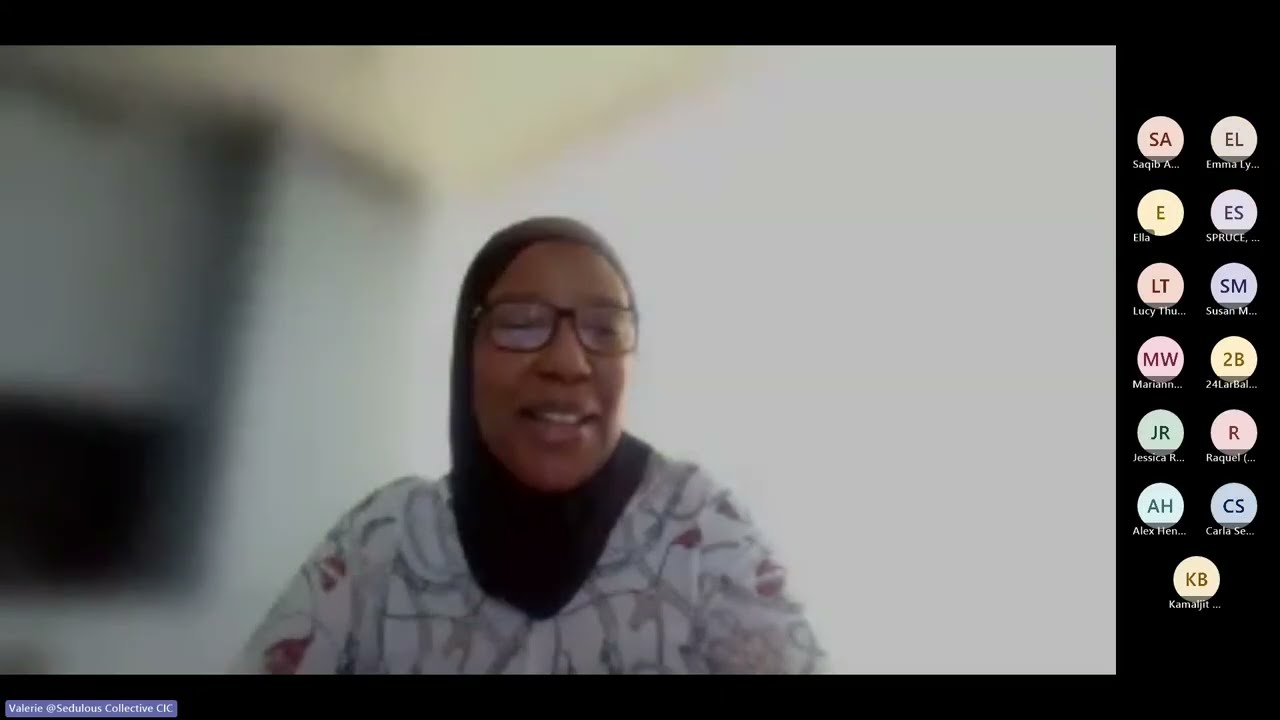
Hosted on 8th July by Sedulous collective, this interactive webinar explored how lived experience and community knowledge can strengthen research, challenge traditional ideas of evidence, and lead to more meaningful equitable outcomes.
Drawing on learning from community workshop and an ongoing systematic review, the session explored learnings, reflections and practical insights for researchers, community organisations and decision makers. The session considered how communities can influence research from its earliest stages and how different forms of knowledge can be brought together, valued and used with equal rigour.
Participants were invited to reflect on the relationship between community knowledge and established research practice through a range of interactive discussions and activities. One memorable activity asked:
If research were an animal what would it be and why?
Responses included sheepdogs, owls, magpies and butterflies, creating a diverse “research menagerie” that reflected participants different experiences and understandings or the research process.
The webinar formed part of a wider programme of work led by Sedulous Collective. Previous community workshops helped identify what equitable, community centred research should be like, and these priorities are now being compared with evidence from ongoing systematic review. This work will inform the next phase of co-designing practical guidance for community engaged research.
Watch the webinar:
To learn more about the work or discuss opportunities for collaboration, contact:
Raquel Caires Januario: raquel.c.januario@sedulous.org.uk
Valerie Chung: valerie.chung@sedulous.org.uk
Building an evaluation framework, a practical guide presented by Dr Nicole Adams-Quackenbush
Hosted on 22 July 2026, this practical 90-minute webinar supported people working in voluntary, community, faith and social enterprise organisations to strengthen their understanding of evaluation and develop more effective approaches to demonstrating their impact.
The session highlighted that evaluation is more than a requirement from funders. When planned and used effectively, it can help organisations understand what is working, identify areas for improvement, demonstrate the difference their work makes and build a stronger case for future funding or growth.
During the webinar, Nicole explored the different points in a programme’s lifecycle when evaluation can be most useful. Participants were introduced to four main types of evaluation—formative, process, outcome and impact—and considered which approaches might be most appropriate for their own projects and organisations.
The session also introduced a clear six-step framework for planning an evaluation from beginning to end. This included identifying the purpose of the evaluation, developing appropriate questions and choosing realistic data collection methods that reflect an organisation’s activities, capacity and intended outcomes.
Throughout the webinar, participants were encouraged to think practically about how evaluation findings would be used, rather than simply collecting information for its own sake. The session demonstrated how a well-designed evaluation can strengthen funding applications, build trust with stakeholders, support organisational learning and provide evidence for expanding or developing a programme.
You can watch the webinar here:

Tags
community research, evaluation, webinar